Keynote Speakers
Beyond the Scaling Race: The Problems Academia Was Built to Solve
Abstract: As models continue to get larger, the resource gap between academia and industry continues to widen. Training a frontier model went from costing tens of thousands of dollars to hundreds of millions of dollars. This raises the question: is academic research in AI still relevant? Speaking from our experience building coding agents in industry, including our work on Devstral and Mistral Vibe, the answer is yes. In this keynote, I'll start by sharing what we've learned shipping coding agents into the hands of real developers, and then make the case for three areas where academic research has been most valuable to us, and where we think the biggest unsolved problems remain. These span evaluation, interaction, and trust: how we measure whether coding agents actually work, how developers will communicate with AI beyond the IDE, and how we can verify that the code these agents produce is correct. Each of these challenges has directly shaped how we build at Mistral, and each requires the kind of deep expertise and long-horizon thinking that academia is uniquely equipped to provide.
Location: The talk will be held in person at Oceania I (Tue 14 Apr 2026, 09:10 - 09:40).
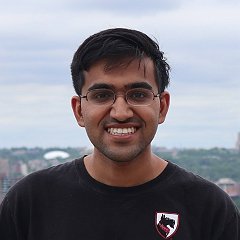
Bio: Kush Jain is a research scientist at Mistral AI who works on Devstral and code agent capabilities. His work includes high quality synthetic data generation, human data annotation and the curation of RL environments at scale to unlock emergent agent capabilities. Previously he was a PhD student at CMU, where he worked at the intersection of test generation and LLMs. His work also received a best paper award at LLM4Code 2025.
Towards Efficient Coding Agents
Abstract: LLM-based coding agents are achieving impressive performance on complex software engineering tasks, yet their high computational cost remains a major barrier to practical deployment. This talk focuses on improving efficiency for agent systems via turn control and trajectory reduction. The talk starts with an empirical study of turn-control strategies showing how simple prompts can reduce cost and sometimes improve success rates. Moving forward, I present how inference-time trajectory reduction can remove redundant or expired information to reduce token usage without harming performance. These findings highlight that smarter resource management is able to scalable agent systems. The talk concludes with future research opportunities toward efficiency-aware agent design.
Location: The talk will be held in person at Oceania I (Tue 14 Apr 2026, 10:10 - 10:40).
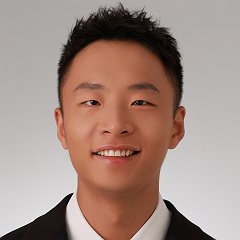
Bio: Dr. Chao Peng is a Principal Research Scientist at ByteDance, where he leads the Software Engineering Lab focusing on AI agents for software engineering. His research interests include software testing, program repair and optimisation, as well as their synergy with machine learning and compiler techniques. His work has been published in premier venues such as ICSE, FSE, ASE, ACL, and NeurIPS. He received the Distinguished Reviewer Award at FSE 2025.
Hands Off the Terminal: LLM Agents that Build, Test, Analyze, and Reproduce
Abstract: Modern software engineering tasks often require substantial manual effort at the command line: setting up build environments, installing dependencies, executing tests, configuring analysis tools, and reproducing research artifacts. These activities are essential for validating code and results, yet they are difficult to automate because projects differ widely in languages, build systems, and tooling, and the required steps are rarely documented precisely. This talk presents a line of work that explores large language model (LLM) agents as autonomous operators of software environments. We introduce agents that (1) build arbitrary projects and execute their test suites, (2) configure and run diverse software analysis tools across real-world code bases, and (3) automatically reproduce the results of research papers through generated reproduction scripts and automated judging. Across multiple benchmarks and open-source projects, these agents successfully complete complex, multi-step workflows that traditionally require expert human intervention, while uncovering misconfigurations, previously unknown bugs, and errors in published artifacts. The results suggest that LLM agents can meaningfully lower the barrier to applying software engineering tools and to validating research, moving routine development and evaluation tasks from manual setup toward autonomous execution.
Location: The talk will be held in person at Oceania I (Tue 14 Apr 2026, 09:40 - 10:10).
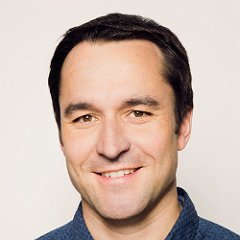
Bio: Michael Pradel is a faculty member at the CISPA Helmholtz Center for Information Security and a full professor at the University of Stuttgart, which he joined after a PhD at ETH Zurich, a post-doc at UC Berkeley, an assistant professorship at TU Darmstadt. He has visited Facebook, UC Berkeley, and UCLA for sabbaticals. His research interests span software engineering, programming languages, security, and machine learning, with a focus on tools and techniques for building reliable, efficient, and secure software. Michael has been recognized through the Ernst-Denert Software Engineering Award, an Emmy Noether grant by the German Research Foundation (DFG), two ERC grants, best/distinguished paper awards at FSE (3x), ISSTA, ASE (2x), ASPLOS, and MSR, and by being named an ACM Distinguished Member.
📝 All names are sorted alphabetically by last name.